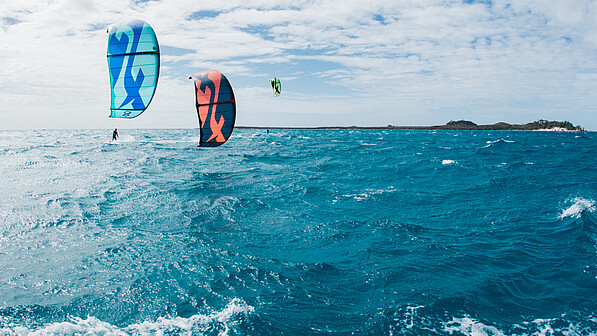
Two kitesurfers with F-ONE kites on open sea - kiteboarding equipment
Kitesurf Vorfahrtsregeln

Who has the right of way when kitesurfing?

Avoid kite collisions

To avoid accidents and collisions in the kitesurfing area, there are simple right-of-way rules that every kitesurfer must know. Just like in road traffic, there are rules in kitesurfing that govern which kiter has priority and must stay on course, and which kiter must take evasive action. When you learn to kitesurf, this is an important part of your theory training and also part of the kitesurfing licence exam. The aim of the right of way rules is to give every kitesurfer simple guiding principles so that no one is put in danger.

Every participant on the water has to behave in such a way that the safety and ease of traffic is guaranteed and that no other person is harmed, endangered or inconvenienced.

International priority rules

When kitesurfing, the International Right of Way rules always apply on every body of water in addition to the rules developed specifically for kitesurfing (e.g. by the IKO and VDWS). The international right-of-way rules also apply on German inland waters:

  • Commercial shipping always has the right of way.
  • After commercial shipping come sailing vessels, which have the right of way over recreational craft (motorboats or sailing boats that run with a motor), which in turn have the right of way over sports equipment. Kitesurfers are considered sailing vessels in this case.
  • Within the group of sailing craft, kitesurfers must give way to sailboats, as sailboats are more sluggish and cannot manoeuvre nearly as fast as a kitesurfer.
  • Muscle power before sailing power: swimmers, surfers, bodyboarders, SUP, canoe ... always have right of way.

On the German coast, kitesurfers are seen as "sports equipment" and are thus at the top of the duty to avoid.
So on the German coast you have to avoid everyone.
Kitesurfing Safety Rules

Kitesurf Vorfahrtsregeln kiteboarding right-of-way rules diagram showing kitesurfers on beach with safety zones

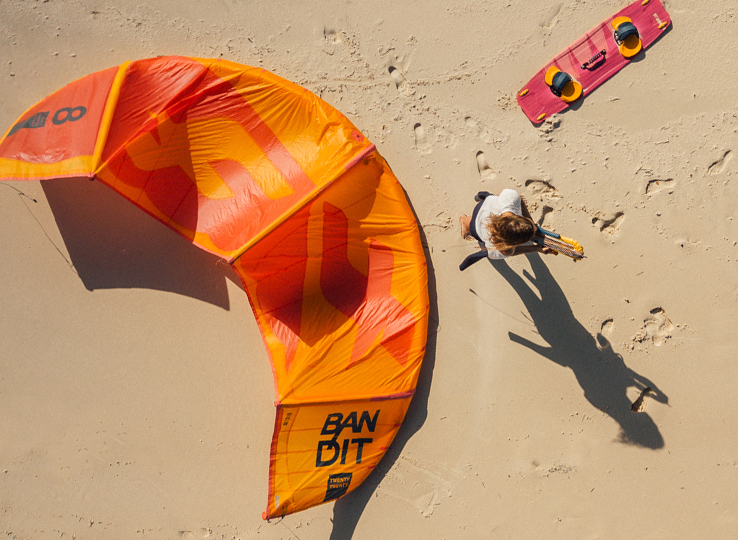
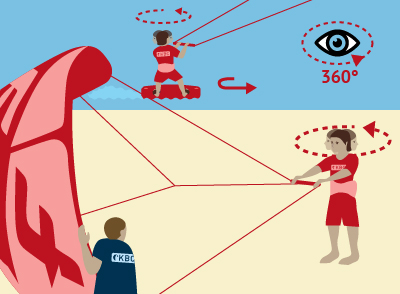
360° view while launching and landing

Before launching and landing your kite, check that there are no hazards in sight and that you are not endangering anyone.

Kitesurf right-of-way rules illustration - two kitesurfers on beach showing wind priority in kiteboarding

Caution in the take-off and landing zone

Kite surfing in the take-off and landing zone is not permitted. Starting and landing kiters have right of way.

Kitesurf right-of-way rules diagram showing >45° upwind and <30° downwind angles for safe kiteboarding on water

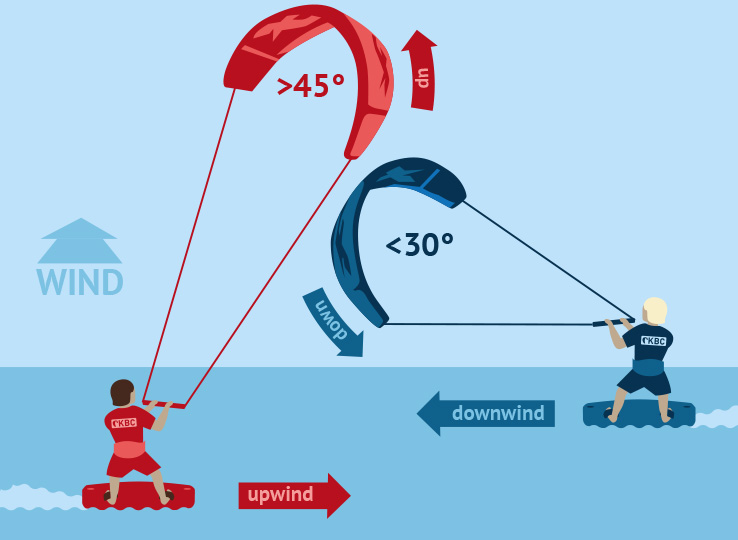
Windward steers up - leeward steers down

When two kitesurfers approach each other, the rider riding higher upwind steers his kite up (>45°). The kiter downwind steers his kite down (<30°).

Kitesurf Vorfahrtsregeln right-of-way rules diagram showing two kitesurfers with red and blue kites - kiteboarding safety

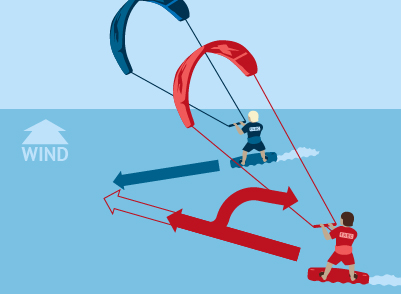
The windward rider gives way to the leeward rider.

The kiteboarder who is riding in the slipstream of the other kiteboarder, i.e. downwind, has the right of way and must keep his/her course, provided he/she sees the kiteboarder upwind at all.

Kitesurfer right-of-way rules - Safety in kiteboarding on water

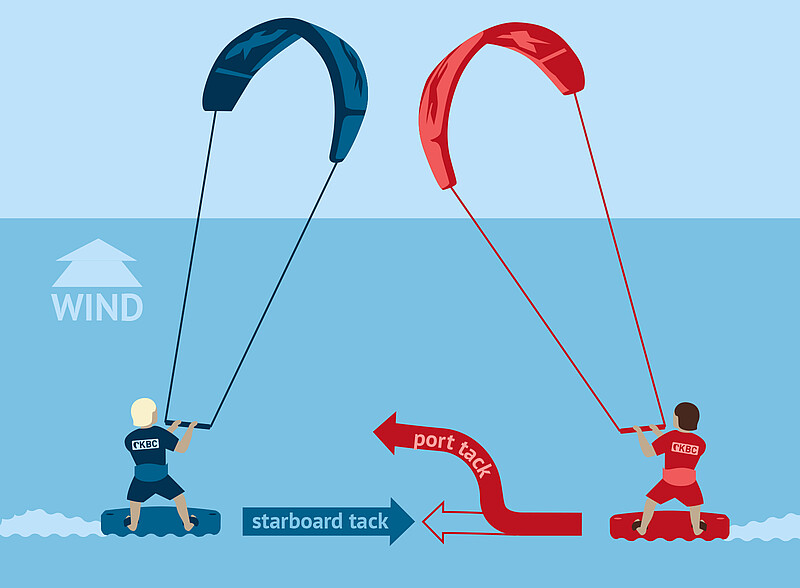
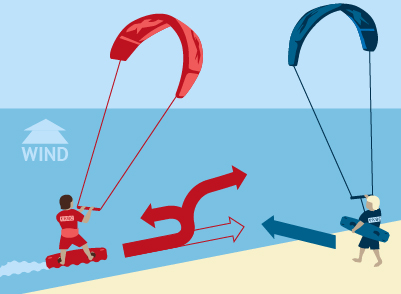
A port tack rider gives way to a starboard tack rider.

If two kitesurfers have their kites on different sides (seen in the direction of travel) and are on a collision course, the kitesurfer who gets wind from the left side (the port side) must give way. The other kitesurfer is obliged to stay on course.

Kitesurf right-of-way rules: Kitesurfers with red and blue kites demonstrating kiteboarding priority rules on beach

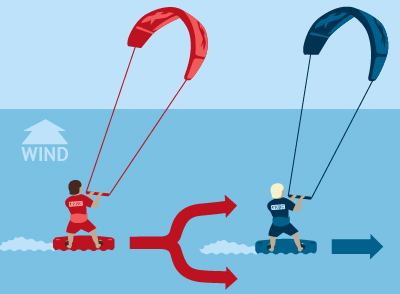
Anyone overtaking keeps out of way to anyone being overtaken

If two kitesurfers are heading in the same direction and the faster kitesurfer behind wants to overtake, he must keep out if way of the slower kitesurfer. If the faster kitesurfer overtakes upwind, he must fly the kite higher, if he overtakes downwind, the kite must come down.

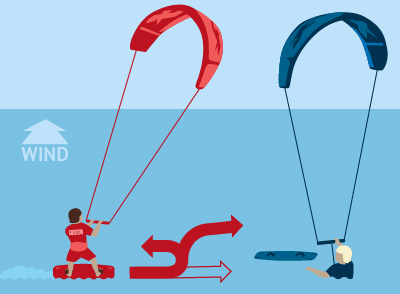
Kitesurf Vorfahrtsregeln right-of-way rules diagram showing kitesurfers with red and blue kites on beach, water sports safety

Show consideration

A rider laying in the water and swimming to a lost board or relaunching a kite from the water has the right of way.

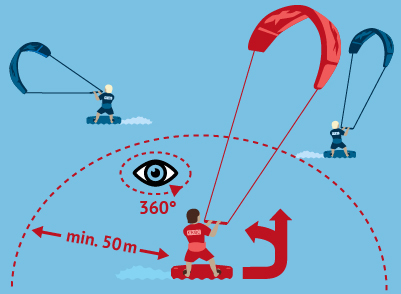
Kitesurf right-of-way rules diagram showing 360° safety zone with 50m minimum distance for kiteboarding water sports

Keeping your distance during manoeuvres

Kiters planning a trick or a turn must keep a distance of at least 50 m from other kiters.

... further kitesurfing knowledge

Learning to kitesurf: The best tips for beginners

Want to finally learn how to kitesurf? Here you will find the most important information you need to learn kitesurfing safely and professionally.

Kitesurfing—everything you need to know

Kitesurf Wikipedia

The language of kitesurfers: Here you will learn all the technical terms, a glossary that explains all the special expressions in an understandable way.

Kitesurf Beginner Course

At KBC you can learn to kitesurf easily, professionally and safely. You will find beginner courses at eight different kite schools worldwide.