Safety in kitesurfing and wingfoiling
KBC provides its services with the utmost care. However, water sports inherently involve risks that cannot be completely eliminated, even with strict adherence to all safety standards. Please read the following rules carefully—they protect you and everyone else on the water.
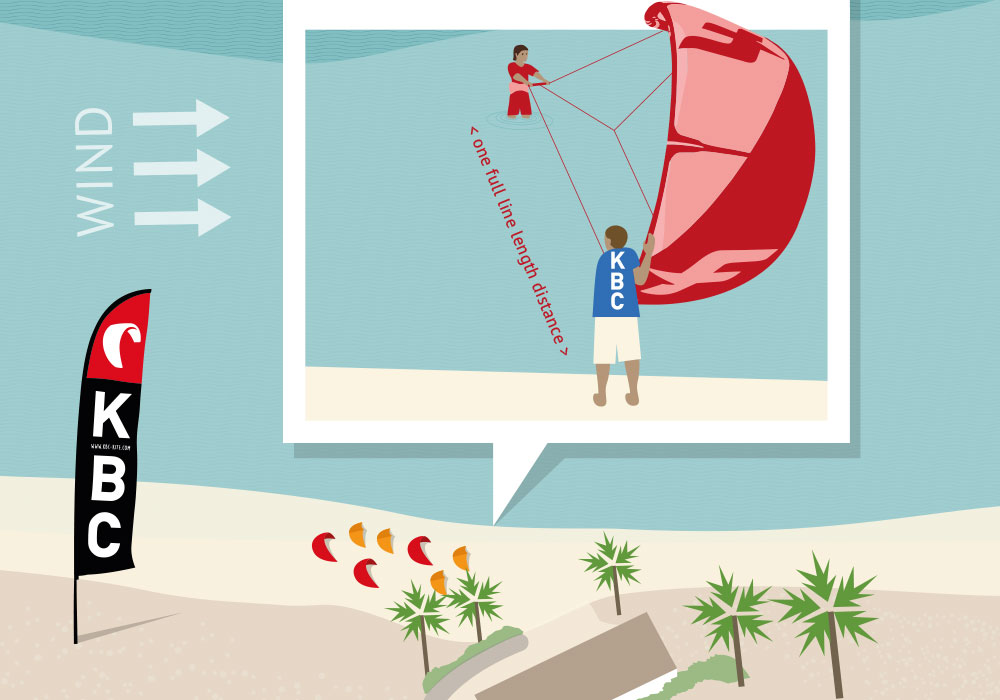
Takeoff and landing are the most critical moments in kitesurfing—this is when most accidents happen. That’s why we have a clear rule that everyone follows.
Important Rule for Side-Shore Conditions
✔︎ The beach assistant stands at the water’s edge—regardless of tides or water level.
✔︎ The kitesurfer stands in the water, at a distance of one full line length (at least 20 meters).
✔︎ The full-line-length distance ensures that no one is struck by the kite, lines, or bar if the kite reacts unpredictably.
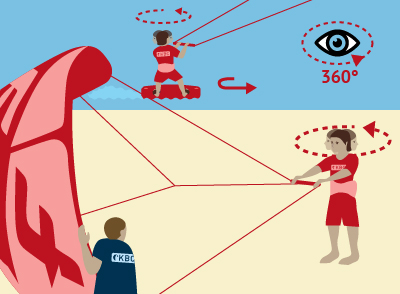
✔︎ Eye contact and a clear hand signal: Takeoff and landing should not occur until both parties have confirmed.
✔︎ When in doubt: it’s better to abort once more than to take a risk.
Kitesurfing Safety Rules
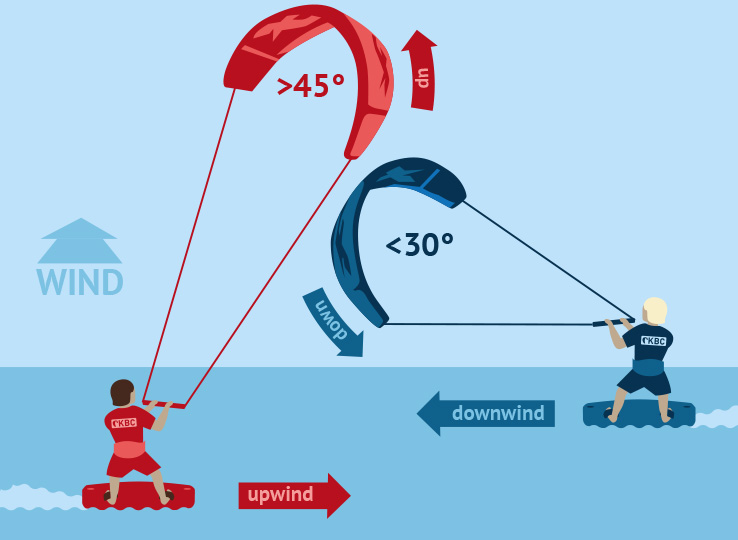
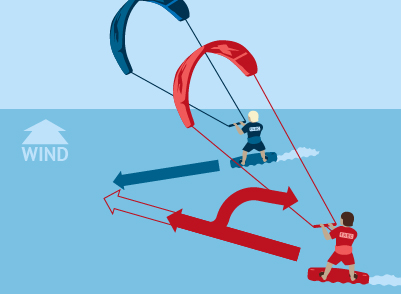
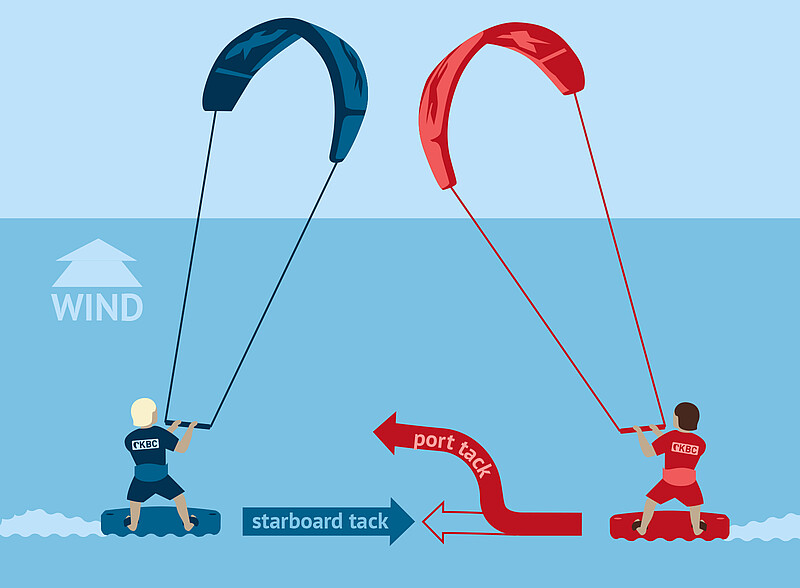
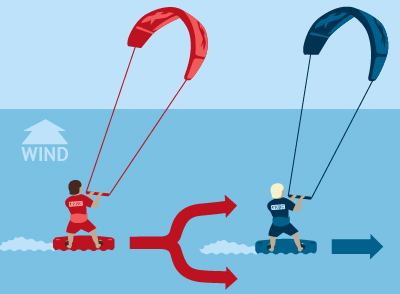
International priority rules
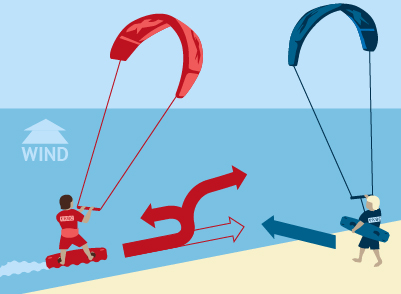
When kitesurfing, in addition to the rules developed specifically for kitesurfing (e.g., by the IKO and VDWS), the International Rules of the Road always apply on any body of water. The International Rules of the Road also apply on German inland waters:
✔︎ Commercial vessels always have the right of way.
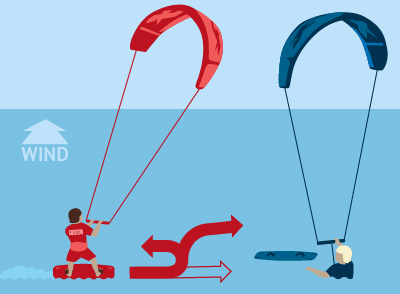
✔︎ After commercial vessels come sailing craft, which have the right of way over recreational boats (motorboats or sailboats powered by a motor); these, in turn, have the right of way over recreational equipment. In this case, kitesurfers are considered sailing craft.
✔︎ Within the group of sailing craft, kitesurfers must give way to sailboats, as sailboats are slower and cannot maneuver nearly as quickly as a kitesurfer.
✔︎ Muscle power takes precedence over sail power: swimmers, surfers, bodyboarders, SUP paddlers, canoeists, etc., always have the right of way.
On the German coast, kitesurfers are considered “sports equipment” and are therefore at the top of the list when it comes to the duty to yield.
So on the German coast, you must yield to everyone.
Rules on the Water
- It is strictly prohibited to remain on land while kiting.
- Follow the general hand signals used for communication on the water.
- Follow the international right-of-way rules for water sports.
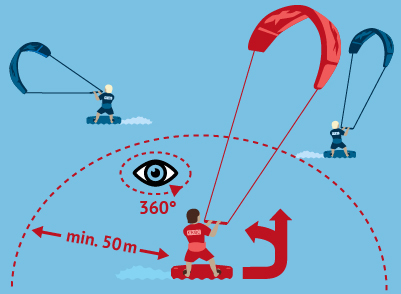
- Always maintain a minimum distance of 50 meters from other kiters—especially beginners.
- Jumping while kiting within 50 meters of the beach is prohibited.
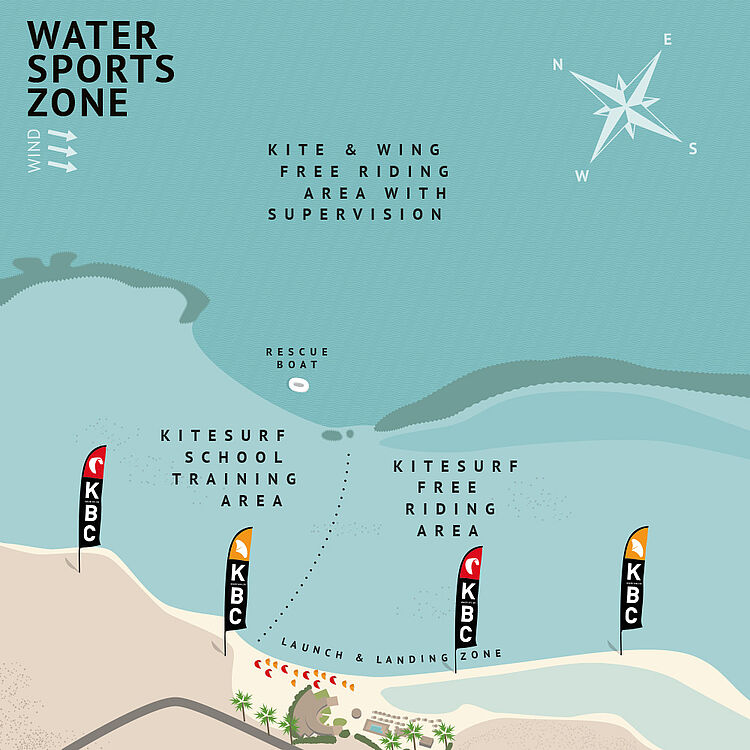
- Kitesurfing and wingfoiling are permitted only within the safety zone (a 600-meter radius around the station).
- The rescue boat operates exclusively in deep water behind the reef, within a 600-meter radius around the station. The water inside the lagoon is too shallow for the boat.
- In the event of dangerous weather or wind conditions, official warning signals, or instructions from the center team, you must stop the activity immediately and return to shore.
- Accidents or injuries must be reported to the center immediately; an accident report must be completed.
Health and Personal Responsibility
Participation in courses, rental of equipment, and use of the facility is at your own risk. Each participant and renter agrees to:
✔︎ strictly follow the safety instructions given by staff
✔︎ to use the equipment responsibly
✔︎ not to endanger themselves or others
By participating, you confirm that you are not aware of any medical conditions that could make participation dangerous. Please immediately inform KBC staff of any health risks, specific medical conditions, or limitations—as well as any injury or discomfort during the activity.
Participation under the influence of alcohol, drugs, or performance-altering medications is not permitted.
Minors
: Minors may only participate with the consent and signature of a legal guardian.